Patrick Adair Supplies
Lavender Rough Opal Pieces - While Supplies Last
Couldn't load pickup availability
These Lavender colored remnants of lab-grown opal are created in-house and available in eight sizes. Our Lavender opal is medium purple with teal-blue undertones. Ideal for creating custom inlays in rings, pendants, pens, and other works of art.
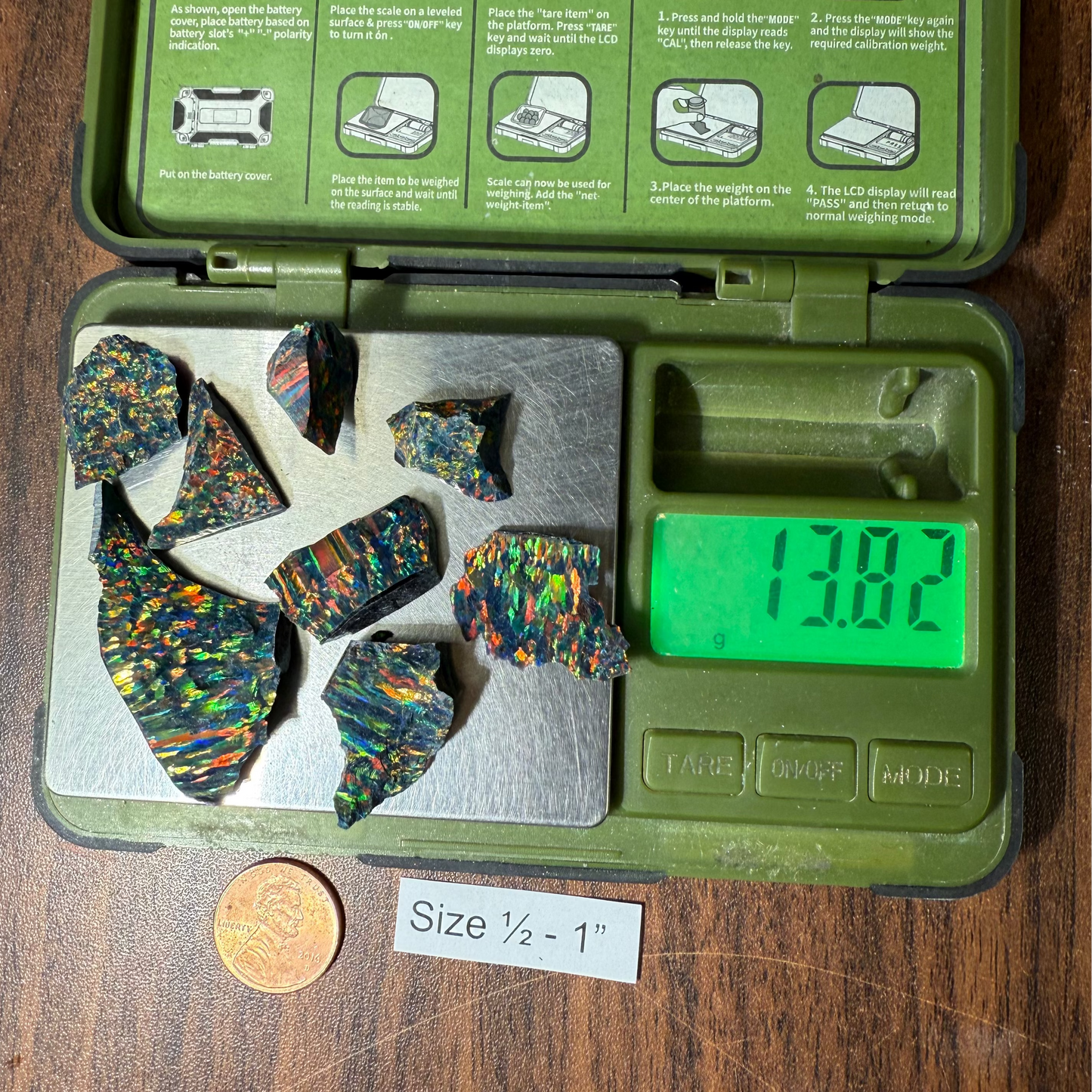
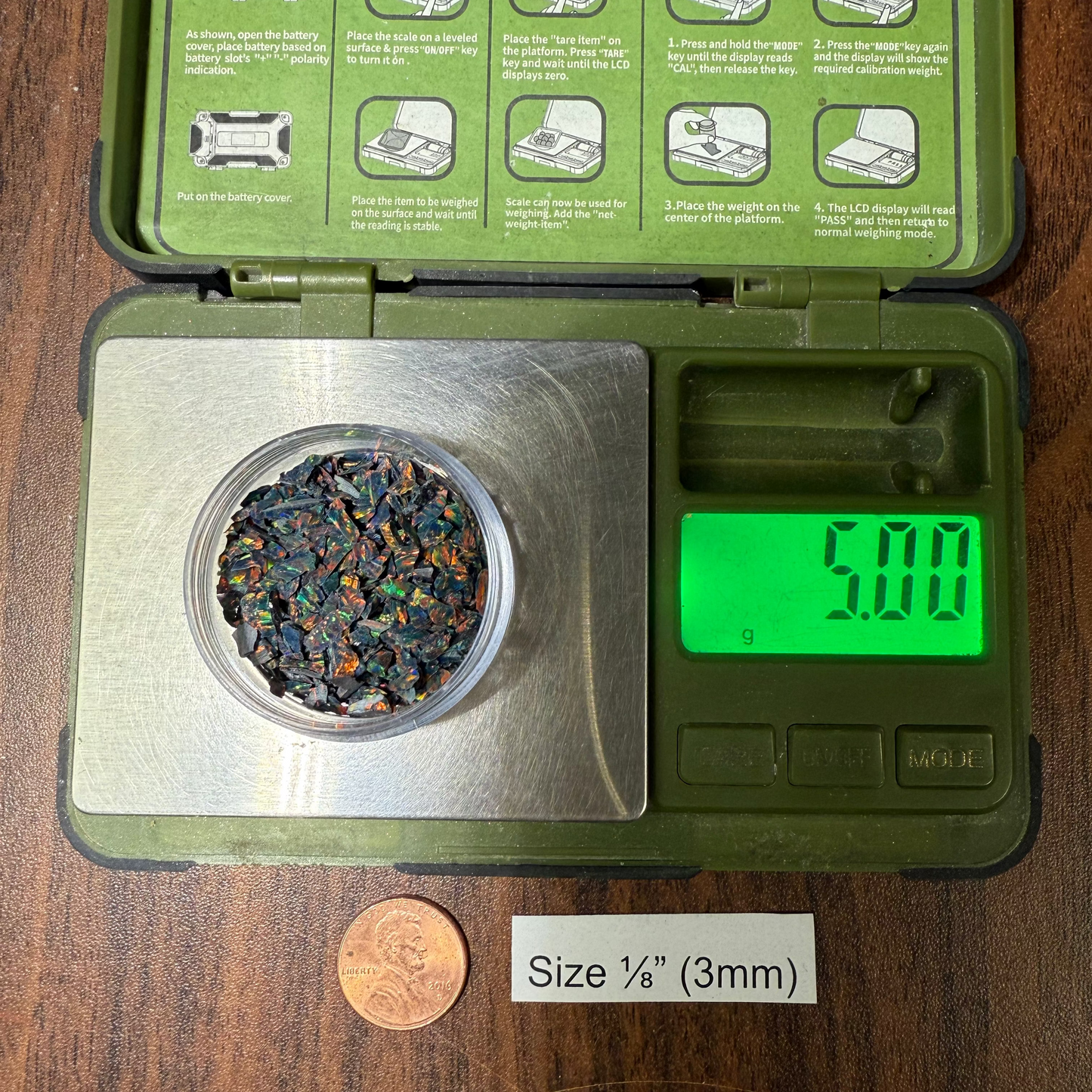
Limited supply and limited colors--when they're gone, they're gone! Some photos are of Black Fire opal to show weight references.
Email us for more information or specific requests. We have 13 larger remnants that range in weight from 13g to 105g. We can create a special order for you if you email us: Support@PatrickAdairSupplies.com.
Share

What is the black substance on one side of the purple opal?
Hi Terry,
It's like the crust on a slice of bread. Were you one of those kids who made his mom trim the crust off your sandwiches? Haha!
Here are two explanations for the dark layer on the opal top of the opal slabs, as shown on some of the pieces in the photos on our website.
1. The Crucible Edges
Premium lab-grown opals take roughly 10 to 18 months to grow in a highly-controlled laboratory environment. Sub-micron silica spheres are settled or chemically grown inside a mold or crucible container. The outer 'skin' is the zone where the chemical mixture made direct contact with the walls of the container during the settling, compression, or heating phases. Just like bread dough touching a hot baking pan, this outer boundary cures with a different texture and look than the pristine, colorful interior.
2. Settling and Excess Resin Pools
Most ultra-premium, thick synthetic slabs are polymer-impregnated opals consisting of roughly 80% silica and 20% resin. During the stabilization process, the porous column structures of silica are soaked in a chemical resin to prevent cracking or crazing. Excess resin naturally pools, settles, and hardens on the outermost top, bottom, and side faces of the massive slab block. This creates a thick, dark, dull, or uneven plastic-like crust over the opal layers underneath.
Best,
Carolyn
PAS Support
The lavender rough opal is beautiful